JapaneseKantoMain courseLactose-free
Chirashi-ZushiSushi Rice with Salmon, Tuna, Prawns and Egg
A Japanese classic from Kanto: in Edomae chirashi, as it is eaten in Tokyo, slices of raw salmon and tuna, prawns, golden egg threads, cucumber and glistening salmon roe lie on sushi rice in the bowl like a colourful garden. Chirashi means “scattered”, and in Japan the colourful bowl belongs to festive days, above all to Hinamatsuri, the Girls' Festival on the third of March. The wafer-thin sweet omelette contains a splash of mirin and therefore alcohol, which cooks off during cooking.
55
minutes
4
servings
17
Ingredients

Instructions
Prepare the sushi rice following the basic recipe and leave it to cool to body temperature, covered with a damp cloth; it must not go in the fridge, where it turns hard. Only buy fish for sushi that is explicitly sold as sushi grade for eating raw; it must previously have been frozen at -20 °C for at least 24 hours — ask the fishmonger about this — or it must be frozen at home for 48 hours. Keep the salmon and tuna in the fridge until you slice them.
Bring 1 l water to a rolling boil with the salt in a pan. Blanch the mangetout (or edamame) in the boiling water for 1 minute until bright green, then lift them with a slotted spoon into a bowl of iced water: this keeps their colour and bite.
Add the prawns to the same bubbling water and cook over a medium heat until they are pink and white all over and firm.
Plunge the prawns into the iced water as well so that they stay juicy and stop cooking. Pat the prawns and mangetout thoroughly dry, halve the prawns lengthways and the mangetout diagonally; edamame stay whole.
For the omelette, stir the eggs with the sugar and mirin in a bowl with chopsticks until the sugar has dissolved, without beating them until foamy. Pour the mixture through a fine sieve: this makes the omelette smooth and evenly yellow, without white streaks of egg white.
Warm a non-stick frying pan (about 20 cm) over a low heat and wipe it with a piece of kitchen paper soaked in oil. Pour in a quarter of the egg mixture, swirl the pan until the base is covered wafer-thin and leave it to set until the surface no longer looks glossy; turn it, cook for a few more seconds and lift it out. Make four thin, fully set omelettes in this way, wiping the pan again each time; if the heat is too high, the sugar browns and the egg turns patchy.
Stack the omelettes, roll them up tightly and cut them into wafer-thin strips with a sharp knife, then pull them apart loosely. These golden egg threads are called kinshi tamago and later form the bed on which the fish and prawns lie.
Wash the cucumber, halve it lengthways, scoop out the seeds with a teaspoon and slice it thinly on the diagonal. Using dry scissors, cut the nori sheets into 3 cm wide strips and these into very fine shreds.
Only now take the salmon and tuna out of the fridge. While slicing, keep dipping the knife and your hands into cold water, and cut the fish at an angle to the grain into bite-sized slices about 5 mm thick, using long, drawing strokes, because sawing would shred the delicate flesh. Rinse the board with hot water afterwards.
Using a moistened rice paddle, divide the rice loosely between four shallow bowls, about 250 g per bowl, and smooth it without pressing it down. Sprinkle with the sesame seeds, scatter over the nori strips and spread the egg threads on top as a golden layer.
Arrange the fish, prawns, cucumber and mangetout in small groups on the bed of egg, placing contrasting colours next to each other, such as red tuna next to green cucumber and orange salmon next to the red-and-white prawns. Spoon the salmon roe into the centre, where it gleams like a jewel.
Garnish each bowl with a little heap of wasabi paste and some gari, and pour the soy sauce into small bowls. To eat, put a touch of wasabi on a piece of fish, dip only the fish briefly into the soy sauce and eat it with a little rice; poured over the rice, the soy sauce would make it salty and mushy. Eat the bowls within two hours, because raw fish must not stand unrefrigerated for any longer than that.
Edited by Peter Hölzer, head chef and master butcher
Similar recipes

Culinse · 35 min
Negi-Ramen — Shoyu Ramen with a Mountain of Spring Onions

Culinse · 45 min
Yokohama-style Iekei-Ramen
Culinse · 50 min
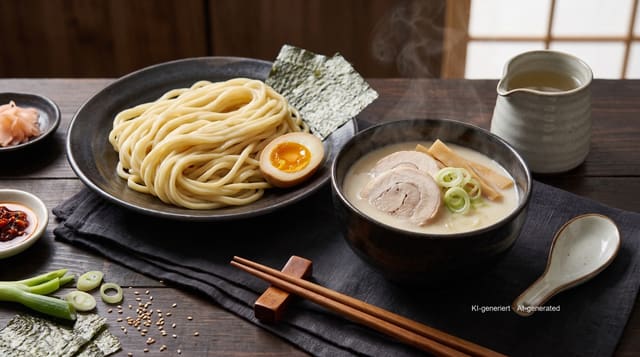
Tori-Paitan-Tsukemen — Dipping Ramen with Creamy Chicken Broth

Culinse · 45 min
Miso-Tsukemen — Dipping Ramen with Thick Miso Broth

Culinse · 50 min
Ogikubo-Ramen with Anchovy Shoyu

Culinse · 25 min
Vegan Abura Soba — Brothless Ramen with Smoked Tofu

Culinse · 30 min
Unadon — Glazed Eel on Rice

Culinse · 35 min