TurkishBasic recipeVegetarianVegan
Nohut mayasıChickpea Sourdough for Bread and Pastries
A Turkish basic recipe used all over Turkey: nohut mayası is the old leaven of Anatolian home baking, for which coarsely crushed chickpeas stand with warm water and a little salt for 12 to 24 hours in a warm place until a thick layer of foam forms. Stirred with flour, it becomes a pre-ferment that makes bread light without bought yeast and gives it a strong, slightly sour aroma and a long-lasting, moist crumb. It is used to bake Köy ekmeği — village bread and Bazlama — pan-fried flatbread, and in İzmir it is traditionally used to bake the bread for Kumru — İzmir sandwich with sucuk and cheese.
20
minutes
2
servings
4
Ingredients

Instructions
Wash a screw-top jar of 1 litre thoroughly and rinse it with very hot water, because only in a clean jar do the right microbes take hold. Coarsely crush the chickpeas in a mortar or briefly in a blender so that they break into three or four pieces and no flour forms.
Put the crushed chickpeas and the salt into the jar. Bring the water to the boil, leave it to cool to about 60 °C and pour it over, then stir; the jar should be no more than half full, because the foam rises.
Cover the jar with a clean cloth and the lid laid on loosely, wrap it in a thick towel and put it in a warm place at about 35 to 40 °C, for example in the oven with only the light on. Leave to ferment there for 12 to 24 hours without stirring.
The starter is ready when a thick, fine-pored layer of foam covers the surface and it smells strongly sour; that is as it should be. If it smells rotten or shows mould, throw everything away and start again.
Pour the liquid with the foam through a sieve into a bowl and press the chickpeas lightly; there will be about 300 ml. Throw the chickpeas away.
Stir in the flour a little at a time until you have a thick, smooth pre-ferment. Cover the bowl and leave the pre-ferment in a warm place until it has doubled in size and is full of bubbles.
Use the pre-ferment straight away for baking bread, or put it in the refrigerator covered. Never taste the pre-ferment raw, and always bake bread and pastries made with it right through.
Edited by Peter Hölzer, head chef and master butcher
Similar recipes

Culinse · 100 min
Nohutlu pilav — Rice with Chickpeas

Culinse · 90 min
Zeytinyağlı börülce — Dried Black-Eyed Beans in Olive Oil
Culinse · 125 min
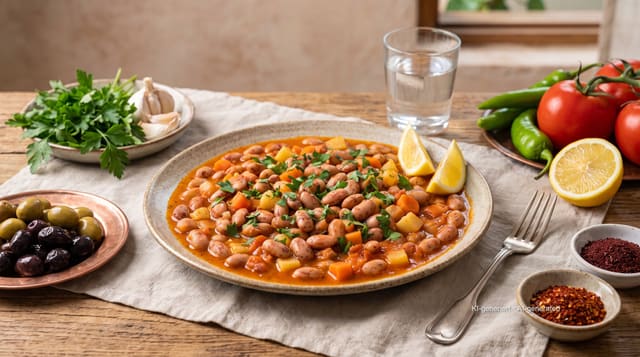
Zeytinyağlı barbunya — Borlotti Beans in Olive Oil

Culinse · 55 min
Zeytinyağlı bamya — Okra in Olive Oil

Culinse · 35 min
Kabak kızartması — Fried Courgettes with Yoghurt

Culinse · 220 min
Erişte — Egg Noodles for Drying

Culinse · 95 min
Midye pilaki — Mussels with Vegetables in Olive Oil

Culinse · 42 min