KurdishBerwarCakeBaked goodsVegetarian
PeqlaweWalnut Baklava, Sulaimaniyya Style
A Kurdish classic from Sulaimaniyya and Hawraman in north-eastern Iraq: Sulaimaniyya is known for its Peqlawe bakeries, and for Eid and Newroz many homes have large trays of it ready. In Turkish the pastry is called Baklava, in Iraq Baqlawa and in Iran Baghlava. Wafer-thin sheets of pastry, each brushed with clarified butter or margarine, enclose a thick layer of walnuts with cardamom, and the cold rose-water syrup poured over the hot Peqlawe makes the diamonds moist inside while they stay crisp on top.
110
minutes
30
servings
10
Ingredients

Instructions
For the syrup, bring the sugar for the syrup and the water to the boil in a pan, stirring, until the sugar has dissolved. Add the lemon juice and cardamom pods and simmer the syrup uncovered over a low heat without stirring again, so that it does not crystallise; be careful, hot sugar syrup sticks to the skin and causes severe burns.
Take the pan off the heat, stir in the rose water and leave the syrup to cool completely; ideally make it right at the start so that it is cold when the Peqlawe comes out of the oven. Fish out the cardamom pods before pouring it over.
Melt the butter or margarine in a small pan over a low heat and skim off the white foam. Carefully pour the clear fat into a bowl, leaving the milky sediment behind in the pan; clarified like this, it browns evenly in the oven and makes the sheets crisp.
Finely chop the walnuts with a large knife until they are about the size of grains of rice, or pulse them briefly in a blender without grinding them to a powder. Mix with the sugar for the filling and the ground cardamom.
Brush an ovenproof dish of about 25 × 35 cm with clarified butter or margarine. Trim the yufka sheets to the size of the dish and keep them under a slightly damp tea towel so that they do not dry out and break.
Lay one sheet in the dish and brush it thinly with clarified butter or margarine, lay the next sheet on top and brush it in the same way, until there are 14 sheets in the dish. Spread the walnut filling evenly over them and press it down lightly.
Layer the remaining 12 sheets on top one at a time in the same way, brushing each one; brush the top layer generously with fat. Using a sharp knife, cut into diamonds of about 5 cm: first cut lengthways into strips 5 cm wide, then cut diagonally across them, cutting right through to the bottom of the dish.
Preheat the oven to 170 °C top and bottom heat. Drizzle the remaining clarified butter or margarine over the cut lines and bake the Peqlawe on the lower shelf until it is evenly golden brown and the layers have fanned out at the cut edges.
Take the dish out and immediately pour the cold syrup slowly and evenly over the hot Peqlawe, especially into the cuts: cold syrup on hot pastry sizzles briefly and is soaked up without the sheets going soft. Only touch the hot dish with oven gloves.
Leave the Peqlawe to stand uncovered at room temperature overnight so that it absorbs all the syrup and stays crisp on top. Before serving, cut along the diamonds once more and lift them out.
Tip: With pistachios instead of walnuts, the Peqlawe becomes even more festive: finely chop 400 g unsalted, shelled pistachios and sprinkle a little finely ground pistachio on top. Loosely covered at room temperature, it keeps for about a week; it does not belong in the fridge, because the pastry goes soft there and the syrup turns sticky. Serve with Çay — Kurdish tea in a glass.
Edited by Peter Hölzer, head chef and master butcher
Similar recipes

Culinse · 10 min
Mast û xiyar — Cucumber Yogurt with Mint

Culinse · 105 min
Germiya erîşte — Yoghurt Soup with Homemade Noodles and Chickpeas

Culinse · 170 min
Kutilka kelandî — Diyarbakır-Style Boiled Stuffed Bulgur Dumplings

Culinse · 135 min
Kutilk — Duhok-Style Fried Stuffed Bulgur Dumplings

Culinse · 185 min
Qelî bi qeysî — Lamb Confit with Rice and Apricot Sauce

Culinse · 65 min
Dokliw — Mahabad-Style Yogurt Soup with Broken Rice
Culinse · 60 min
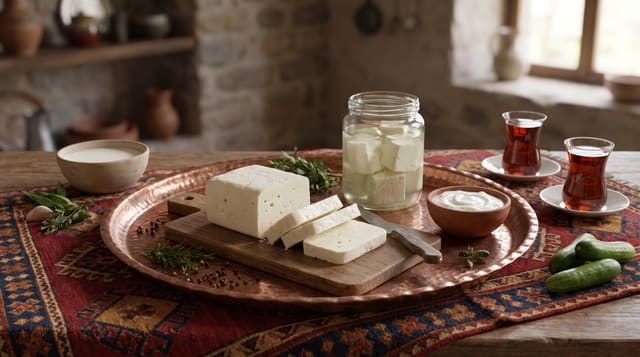
Penîr — Kurdish Homemade Cheese with Rennet

Culinse · 135 min