JapaneseKyushuMain courseLactose-free
Kurume-RamenThe Original Tonkotsu
A Japanese classic from Kyushu: in Kurume, in Fukuoka Prefecture, ramen has been made with pork bone broth since 1937 — a thick, milky broth with a powerful aroma, topped with chashu, wood ear mushrooms, nori and sesame. Unlike Hakata-style Tonkotsu-Ramen, the broth here is even thicker and stronger-smelling, because in Kurume the pot is never completely emptied but is topped up again and again with fresh bones (yobimodoshi), and the noodles are a little thicker — Kurume is considered the birthplace of tonkotsu ramen. Serves 4.
90
minutes
4
servings
10
Ingredients

Instructions
Cover the pork bones with cold water in a pan, bring to the boil and blanch at a rolling boil until a thick, grey layer of scum has formed.
Drain the bones and rinse them under running water, scrubbing off any dark traces of blood and clots. This is quickly done and ensures that the broth later smells strong but not rank.
Bring the tonkotsu broth to the boil in a large pan, add the bones and boil vigorously over a high heat with the lid set on at an angle. This is how it is done on a large scale in Kurume (yobimodoshi): the pot is never completely emptied but is topped up again and again with fresh bones, and each addition makes the broth thicker and stronger. If it becomes too thick or reduces a lot, top up with hot water so that the bones are always covered.
Meanwhile, soak the wood ear mushrooms in plenty of lukewarm water until they have swollen to several times their size and are soft but springy.
Drain the mushrooms, trim off the hard stalk ends and cut the mushrooms into fine strips. Slice the spring onions into fine rings, set out the nori sheets and put a large pan of plenty of unsalted water on to boil for the noodles.
Pour the broth through a fine sieve into a clean pan and discard the bones. It is now thick and milky white and smells strongly of pork; there should be about 1.6 litres, otherwise top up with hot water.
Bring the broth back to the boil — unlike a clear broth, it can bubble away merrily, as this keeps the fat and broth creamily emulsified. Warm the chashu slices in it for 30 seconds until the fat shimmers translucently, and lift them out.
Fill four large bowls with hot water, leave them for a moment and pour the water away, then put 3 tbsp shoyu tare in each bowl. No aroma oil is needed; the fat in the thick broth carries the flavour.
Loosen the noodles with chopsticks in the rapidly boiling water and cook them: fresh noodles for 1 to 2 minutes, dried ones according to the packet. Shake them vigorously in the sieve until hardly any water drips from them, so that no cooking water dilutes the broth.
Divide the hot broth among the bowls, about 400 ml each, and stir it into the tare until it is an even beige.
Add the noodles and arrange them with chopsticks so that they lie loosely side by side and do not sit in a tangle in the thick broth.
Arrange two slices of chashu, the wood ear strips and the spring onion rings in groups on top of each bowl and scatter over the sesame seeds. Lean a sheet of nori against the rim of each bowl so that it does not go soggy straight away, and serve the ramen immediately.
Edited by Peter Hölzer, head chef and master butcher
Similar recipes

Culinse · 40 min
Yasai-Ramen — Vegan Vegetable Ramen

Culinse · 55 min
Tsukemen — Ramen for Dipping
Culinse · 40 min
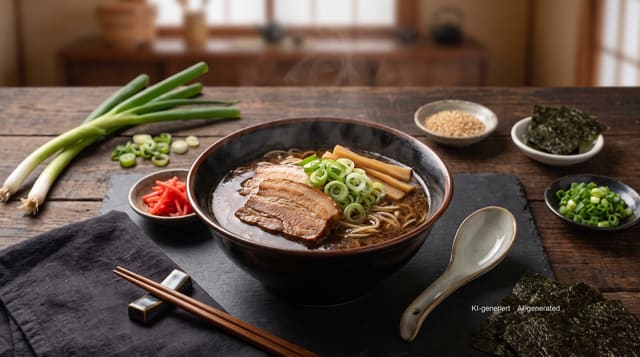
Ube-Ramen — Rich Yamaguchi-style Tonkotsu
Culinse · 30 min
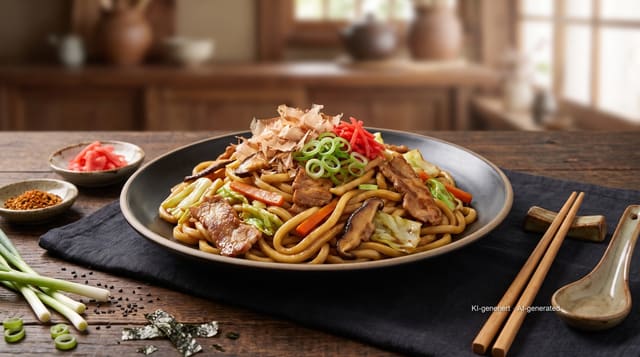
Yaki-Udon — Fried Udon with Pork and Cabbage

Culinse · 35 min
Miyazaki-Ramen with Soft Noodles and Takuan
Culinse · 35 min
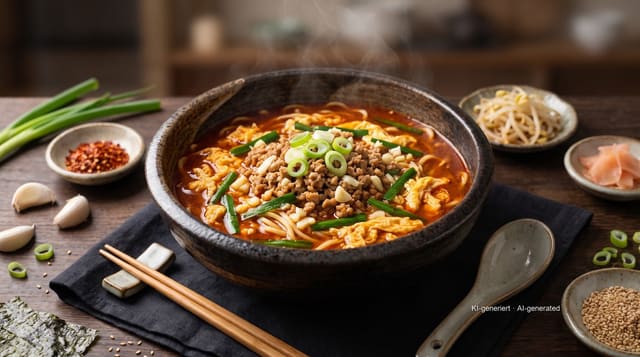
Miyazaki-style Karamen — Spicy Ramen with Garlic and Egg Flakes

Culinse · 40 min
Aroma Oil for Ramen — Negi Oil and Mayu

Culinse · 55 min