JapaneseKyushuMain courseLactose-free
Kagoshima-Ramen with Tonkotsu and Chicken Broth
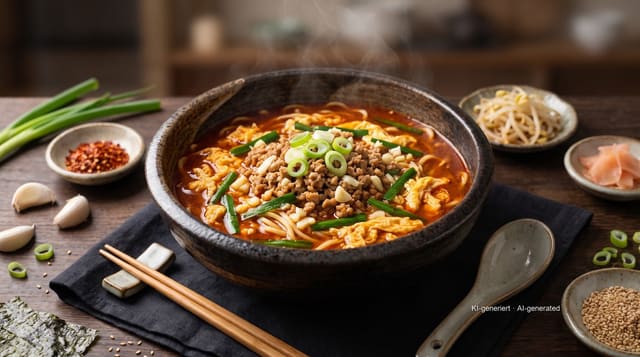
A Japanese classic from Kyushu: in Kagoshima, in the south of the island, the ramen broth is pale, semi-cloudy and pleasantly mild; it smells of pork and chicken and gets a delicate, rounded depth from the kombu. Unlike Hakata-style Tonkotsu-Ramen, the broth here is a blend of pork and chicken broth with kombu, half as thick and milder, with stir-fried cabbage and onions on top — and in Kagoshima, a small dish of pickled daikon is always on the table before the bowl arrives. The wood ear mushrooms soak for 15 minutes, and in the same time the kombu steeps in the broth.
45
minutes
4
servings
12
Ingredients

Instructions
Soak the wood ear mushrooms in plenty of lukewarm water until they have swollen to several times their size and are soft and elastic; meanwhile, start the broth.
Combine the tonkotsu broth and tori chintan in a pot. Just wipe the kombu with a damp cloth rather than washing it, because the white coating carries flavour, and add it to the broth. Warm slowly over a medium heat and remove the kombu as soon as small bubbles rise at the edge of the pot — if boiled along with the broth, it would make it slimy and bitter.
Drain the mushrooms, cut off any hard stalk ends and slice the mushrooms into fine strips. Slice the spring onions into fine rings and put a large pot with plenty of unsalted water on to boil for the noodles.
Peel the onion and cut it into strips; cut the white cabbage into rough pieces of about 3 cm. Heat the sesame oil in a large frying pan until very hot, add the onion and cabbage and stir-fry, turning them, until the cabbage wilts and turns golden brown at the edges and the onions smell sweet — it is exactly these roasted flavours that make the topping.
Keep the broth hot over a low heat without letting it boil, so that it stays pale and semi-cloudy instead of turning milky. Warm the chashu slices in it for 30 seconds, until the fat looks glassy, then lift them out.
Divide the daikon no amazuzuke, the sweet and sour pickled daikon, between four small dishes and put them on the table now — in Kagoshima it is waiting there before the ramen arrives and is eaten first.
Warm four large bowls with hot water and pour it away, then put 3 tbsp shoyu tare into each bowl. The bowls do not need an aroma oil; the fat from the pork broth and the sesame oil on the cabbage bring enough fragrance.
Loosen the noodles with chopsticks in the rapidly boiling water and cook them: fresh ones for 1 to 2 minutes, dried ones according to the packet. Shake them vigorously in a sieve until hardly any water drips off, so that no cooking water dilutes the broth.
Divide the hot broth between the bowls, about 400 ml each, and stir it together with the tare until it is an even, light golden brown.
Add the noodles and arrange them with chopsticks so that they lie loosely in the broth rather than in a tangle.
Arrange two slices of chashu, the stir-fried cabbage and onions, the wood ear strips and the spring onions in separate groups on top of each bowl and serve the ramen immediately, while the cabbage still smells of its roasted aromas.
Edited by Peter Hölzer, head chef and master butcher
Similar recipes
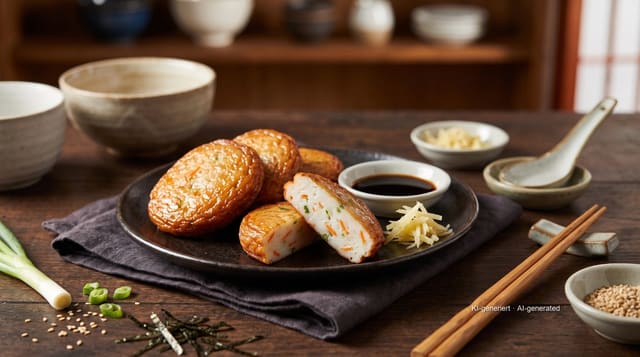
Culinse · 45 min
Kagoshima-style Satsuma-age — Deep-fried Fish Cakes

Culinse · 170 min
Kagoshima-Tonkotsu — Pork Ribs Braised with Miso and Black Sugar

Culinse · 55 min
Wantan-men — Tokyo-style Shoyu-Ramen with Prawn Wantan
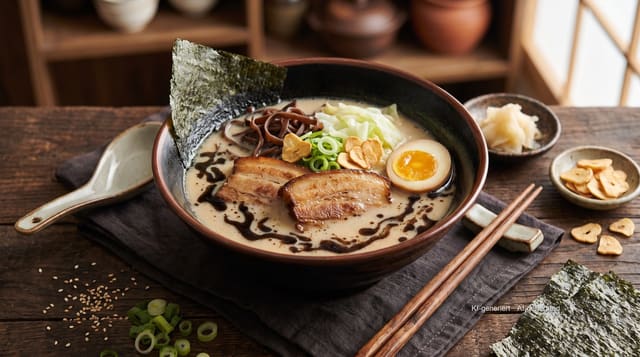
Culinse · 40 min
Kumamoto-Ramen with Black Garlic Oil
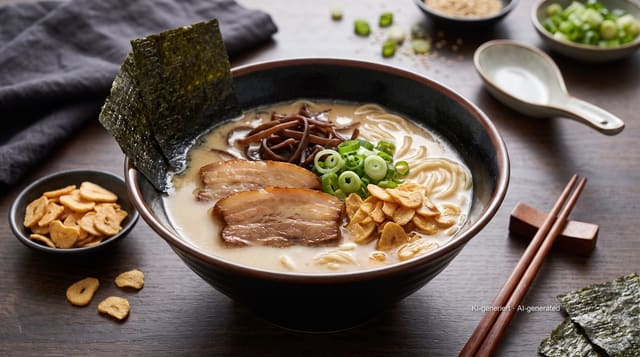
Culinse · 35 min
Tamana-Ramen with Garlic Chips
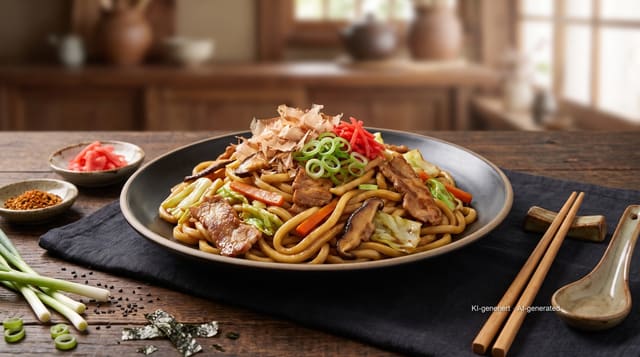
Culinse · 30 min
Yaki-Udon — Fried Udon with Pork and Cabbage

Culinse · 35 min
Miyazaki-Ramen with Soft Noodles and Takuan
Culinse · 35 min