JapaneseKyushuSnackLactose-freeHigh protein
Kagoshima-style Satsuma-ageDeep-fried Fish Cakes
A Japanese classic from Kyushu: in Kagoshima — Satsuma is the old name of the region — these golden-brown, springy fish cakes are part of everyday life; according to tradition, the method reached the region from the south via Okinawa, and in Kagoshima they are seasoned sweeter than elsewhere. Unlike Kakiage, vegetable and prawn tempura fritters, there is nothing in a batter here: the cakes are finely minced fish fillet, beaten with sugar, salt and starch into a smooth paste and fried in oil — in Kagoshima the souvenir par excellence and at the same time an addition to many hotpots such as oden, the winter hotpot with daikon, eggs and tofu. The paste contains sake and mirin, and therefore alcohol, which cooks off during cooking, and it rests in the fridge for 30 minutes before shaping.
45
minutes
4
servings
13
Ingredients

Instructions
Briefly rinse the fish fillet under cold water and pat it thoroughly dry with kitchen paper. Run your fingertips over the fillet and pull out any remaining bones with tweezers, as the food processor would only chop them up and they would end up in the fish cakes. Cut the fish into 2 cm cubes and keep it chilled until needed.
Put the fish cubes in a food processor or blender with the salt and blend until a sticky, glossy paste forms that pulls into threads; scrape down the sides with a spatula from time to time. The salt dissolves the protein in the fish and makes the paste elastic, so that the fish cakes turn out springy rather than crumbly.
Add the sugar, sake, mirin, potato starch and egg white and blend briefly until the paste is smooth, pale and even. Do not blend for longer than necessary, as the blade warms the mixture, and warm fish paste turns soft and sticky.
Peel the carrot and cut it into fine sticks about 3 cm long; trim the spring onions and slice them into fine rings. Fold both into the fish paste with a spatula, cover the bowl and chill the paste so that it firms up and is easier to shape.
Pour the frying oil into a tall, heavy pot holding at least 3 litres, so that it is no more than a third full, and heat it to 160 °C; fine bubbles will then rise slowly from a dry wooden chopstick held in it. From now on, never leave the pot unattended and do not let any water get into the oil, so keep your hands, tongs and plates dry. If the oil does catch fire, never try to put it out with water; instead, put a lid on it and turn off the hob.
Lightly grease your hands with the oil for your hands so that the sticky paste does not cling to them. Shape the paste into twelve flat ovals about 8 cm long and 1.5 cm thick, smooth the surface and place the fish cakes on a lightly oiled plate.
Slide six fish cakes one after the other into the oil, away from your body, and fry them, turning once, until they are golden brown all over, visibly puffed up and floating on the surface. The low temperature is important: it lets the fish cakes cook right through to the centre before the sugar colours the crust too dark.
Lift out the fish cakes and leave them to drain on a rack. Cut open one fish cake from the first batch to test: inside it must be white and firm and must not look glassy anywhere; otherwise return the remaining fish cakes of this batch to the oil briefly. Fry the second batch in the same way.
Then turn off the hob and leave the oil to cool completely in the pot. Pour the cooled oil through a fine sieve into a bottle and reuse it once, preferably for fish again because of the fishy aroma; it must never go down the drain.
Peel the ginger and grate it finely, and pour the soy sauce into small dishes. Serve the satsuma-age warm or lukewarm with a small heap of ginger; to eat, put a little ginger on a fish cake and dip it briefly in the soy sauce.
Edited by Peter Hölzer, head chef and master butcher
Similar recipes

Culinse · 170 min
Kagoshima-Tonkotsu — Pork Ribs Braised with Miso and Black Sugar
Culinse · 45 min
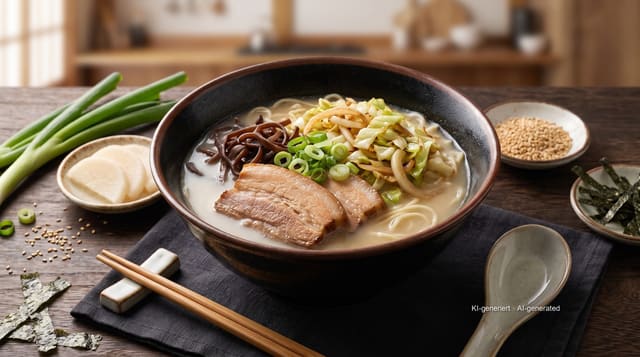
Kagoshima-Ramen with Tonkotsu and Chicken Broth
Culinse · 30 min
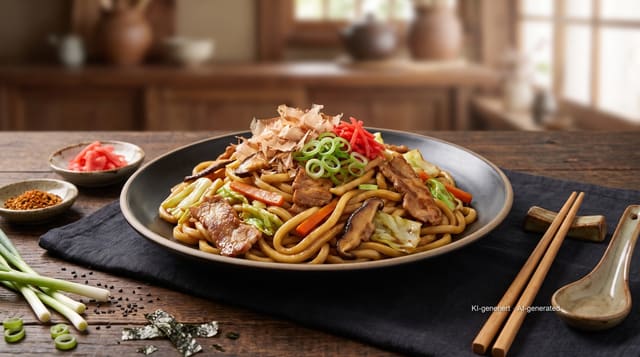
Yaki-Udon — Fried Udon with Pork and Cabbage

Culinse · 35 min
Miyazaki-Ramen with Soft Noodles and Takuan
Culinse · 35 min
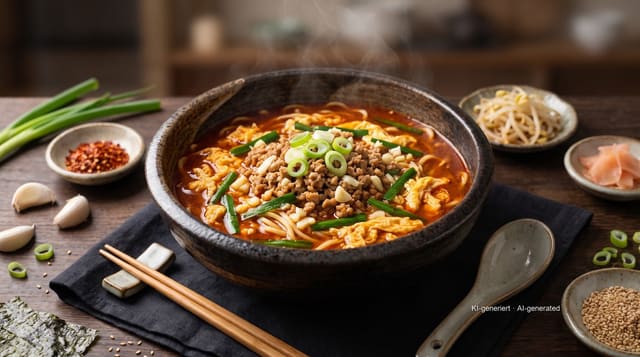
Miyazaki-style Karamen — Spicy Ramen with Garlic and Egg Flakes

Culinse · 40 min
Aroma Oil for Ramen — Negi Oil and Mayu

Culinse · 55 min
Champon — Nagasaki-style Noodle Soup

Culinse · 30 min