ChineseGuangdongSnackLactose-free
Lo Mai GaiSticky Rice with Chicken in Lotus Leaf
A Chinese dim sum classic from Guangdong: Lo Mai Gai (Nuomi Ji) are parcels of lotus leaves in which savoury sticky rice with chicken, shiitake and Chinese sausage is steamed until it has taken on the delicate, green fragrance of the leaf. At the table the leaf is opened, the rice inside is glossy brown, soft and sticky and the filling juicy and robustly seasoned; beforehand the sticky rice soaks for at least 4 hours following the basic recipe, the lotus leaves for an hour, and the chicken marinates for 20 minutes. This makes 4 parcels, one for each person at the table.
80
minutes
4
servings
18
Ingredients

Instructions
Cover the lotus leaves with warm water in a large bowl or in the sink and weigh them down with a plate, and cover the shiitake with warm water in a small bowl as well. Soak until the leaves are soft and pliable.
Meanwhile steam the rice following the basic recipe; for this it must have been soaked for at least 4 hours beforehand. For 600 g steamed sticky rice, two thirds of the basic recipe is enough, so about 270 g raw sticky rice. Keep the finished rice warm, covered, because warm it takes up the seasoning best.
Cut the chicken into dice of 2 cm, peel the ginger and grate it finely. Mix the chicken with the soy sauce, oyster sauce, sugar, cornflour, sesame oil and ginger and marinate, covered, in the refrigerator.
Cut the sausage diagonally into thin slices. Squeeze out the shiitake, cut off the hard stems and halve the caps; trim the spring onions and cut them into fine rings.
Heat the oil for frying in the wok until very hot and stir-fry the chicken, sausage and shiitake until the chicken is pale all over; it only cooks through completely in the parcel.
Take the wok off the heat and fold in the spring onions. Because the chicken is not yet cooked through, shape and steam the parcels now without a break.
Mix the warm rice evenly with the light soy sauce for the rice, the dark soy sauce, the sugar for the rice and the oil for the rice and divide it into 8 equal portions of about 75 g. Rinse the lotus leaves, pat them dry, halve them and cut out the hard central rib.
Spread out half a leaf and press one portion of rice into the middle into a square of about 10 cm, put a quarter of the filling on top and cover with a second portion of rice. Fold the leaf over the rice from below, fold in the sides and roll up into a firm parcel; lay it with the seam underneath and shape the other three in the same way.
Bring about 5 cm of water to a rolling boil in a wok or wide pan, put the parcels with the seam underneath into a bamboo steamer or steamer insert and set it on top without the base touching the water. Steam with the lid on over rapidly boiling water and top up with boiling water if necessary.
Tilt the lid away from your body, because hot steam escapes, open a parcel and check a piece of chicken in the middle: it is 75 °C and white all the way through, otherwise steam for 5 minutes more. The lotus leaf is not eaten; chew sticky rice well and give it to small children and older people only in small pieces.
Edited by Peter Hölzer, head chef and master butcher
Similar recipes

Culinse · 100 min
Cantonese Tang Nian Gao — Sweet Sticky Rice Cake for New Year
Culinse · 95 min
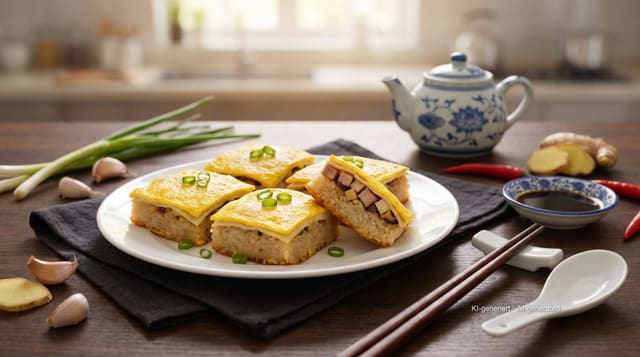
Wuhan-Style Doupi — Sticky Rice under an Egg Skin

Culinse · 35 min
Yangzhou Chaofan — Fried Rice, Yangzhou Style
Culinse · 30 min
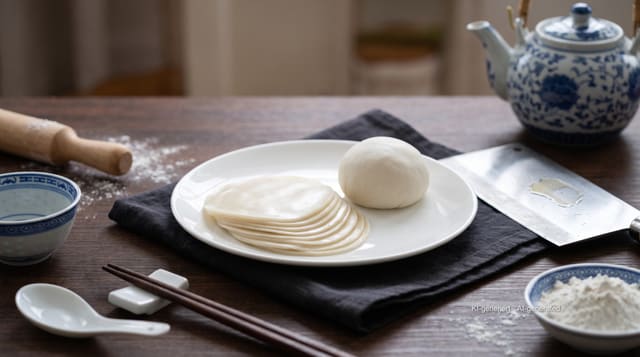
Dim Sum Dough from Wheat Starch — Translucent Wrapper for Har Gow
Culinse · 80 min
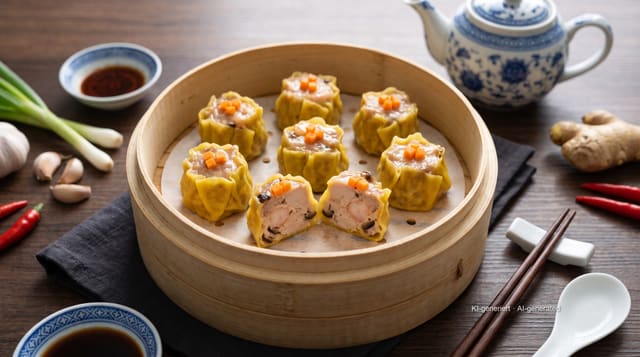
Cantonese Siu Mai — Open Dumplings with Pork and Prawns
Culinse · 80 min
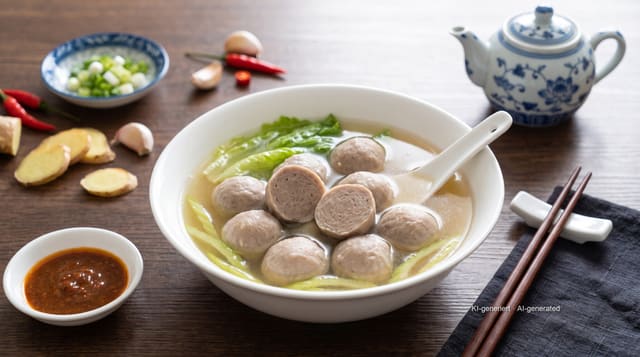
Chaozhou Niurou Wan — Beef Balls Chaozhou Style
Culinse · 135 min
Lotus Seed Paste — Lianrong for Mooncakes and Yeast Buns

Culinse · 65 min